
When researching fertility care in Thailand, laboratory quality is one of the most important factors you can evaluate. The embryology lab is where fertilization, embryo development, and genetic testing take place. Its conditions, equipment, and staffing directly influence the information you receive at each decision point. This guide explains the signals that indicate a well-run lab, the questions you should ask, and how to compare clinics using consistent criteria. It does not rank clinics by success rates or recommend one over another for your individual situation.
At a glance
- Lab quality involves equipment, environment, staff expertise, and quality-control systems.
- Incubator technology and time-lapse imaging are tools, not guarantees.
- Embryologist-to-case ratios affect how much attention your embryos receive.
- Accreditation and audit trails provide independent verification of standards.
- Always confirm current details directly with the clinic in writing.
Why lab quality matters in IVF
The embryology laboratory is where eggs are fertilized, embryos are cultured, and biopsies for genetic testing are performed. Small differences in temperature, air quality, culture media, and handling can affect embryo development. A well-equipped lab with trained staff and robust quality controls aims to minimize these variables. However, no lab can guarantee a specific outcome for any individual patient. Lab quality is one part of a complex process that also includes your medical history, ovarian response, and the clinical team’s decisions.
Key lab-quality signals to look for
When comparing clinics, you can ask about the following categories. Each clinic may present this information differently, so use these as a framework for your own due diligence.
Incubator technology and culture environment
Incubators maintain the temperature, humidity, and gas levels needed for embryo development. Some clinics use time-lapse incubators that allow continuous monitoring without removing embryos from the controlled environment. Others use standard incubators with regular checks. Both approaches can be appropriate, but you should ask how the lab monitors and maintains its culture conditions. For example, DHC materials list Embryoscope+ and Geri incubators, which are time-lapse and benchtop systems respectively. MedPark describes time-lapse incubation and AI-assisted embryo assessment. Jetanin lists EmbryoScope among its services. These are examples of equipment mentioned in public materials; they do not by themselves indicate better outcomes.
Embryologist qualifications and staffing ratios
Embryologists are the scientists who handle eggs, sperm, and embryos. Their training and experience matter. Some clinics state that their embryologists hold certifications such as ESHRE certification. MedPark, for instance, describes ESHRE-certified embryologists. You can ask how many embryologists work in the lab, how many cases they handle at once, and whether the same team will manage your cycle from start to finish. A lower embryologist-to-case ratio may allow more individualized attention, but there is no universal standard for the ideal ratio.
Quality-control and audit processes
Labs should have documented protocols for equipment calibration, air quality monitoring, and media testing. They may also participate in external quality-assessment schemes. Jetanin states that its facilities follow ISO 15189 and ISO 15190 laboratory standards and undergo annual quality-control audits. DHC holds JCI, ISO 9001, RTAC, CAP, and UK NEQAS certifications or quality credentials. These credentials indicate that the lab has met certain organizational and technical requirements, but they do not predict your individual outcome. Ask to see the current scope of any accreditation and how often audits occur.
Genetic testing capabilities
If you are considering preimplantation genetic testing (PGT), the lab’s genetics capabilities are relevant. Some clinics perform PGT in-house, while others send samples to external laboratories. Jetanin describes its genetics laboratory as in-house and lists PGT-A, PGT-M, and PGT-SR using NGS and Sanger sequencing. Superior A.R.T. emphasizes IVF, ICSI, and PGT pathways. DHC provides PGT services. You should ask where the testing is performed, what methods are used, and how results are reported.
How to compare clinics on lab quality
Use a consistent set of questions for each clinic you consider. The table below outlines the type of information you can request. It does not include specific figures because these details change and must be confirmed directly.
| Comparison point | What to ask |
|---|---|
| Incubator type | Do you use time-lapse or standard incubators? How are culture conditions monitored? |
| Embryologist team | How many embryologists are on staff? What are their qualifications and experience? |
| Staffing ratio | How many cases does each embryologist handle at one time? |
| Quality accreditation | Which accreditations does the lab hold? What is the current scope and expiry date? |
| Audit frequency | How often are internal and external audits performed? |
| Genetic testing | Is PGT performed in-house or sent to an external lab? What methods are used? |
| Reporting | How and when will I receive updates on embryo development? |
Selected clinics and their lab-related information
The following clinics are included based on the Thailand PGT hospital library. They are presented in an editorial order that reflects the sequence of this guide, not a ranking of clinical quality or success rates. Each entry summarizes lab-relevant details from the library and notes what you should confirm directly.
1. Deep & Harmonicare IVF Center (DHC)
DHC is a dedicated fertility center in Bangkok’s Rama 9 area. It provides IVF, ICSI, embryo culture, PGT, egg freezing, embryo freezing, and embryo transfer services. DHC holds JCI, ISO 9001, RTAC, CAP, and UK NEQAS certifications or quality credentials. Its materials list Embryoscope+, Geri incubators, IVF Witness, IMSI, and MACS. The 2026 hospital profile reports a 78% average embryo-transfer success rate for 2025, approximately 80%; this is not an individual prediction or guarantee. A June 2026 reference price for the basic single-cycle medical package is THB 490,000; final costs vary by medication, testing, storage, procedures, and travel. You should confirm current lab protocols, embryologist staffing, and the scope of accreditations directly with DHC.
2. Bangkok Hospital Fertility Center
Bangkok Hospital Fertility Center is located on the 5th Floor of D Building at Bangkok Hospital Headquarter. The center describes reproductive endocrinologists, embryologists, an in-house embryology laboratory, male-factor testing, and multidisciplinary care. Published services include IVF, ICSI, PGT-A, egg and embryo freezing, semen analysis, and gynaecologic surgery support. The official fly-in packages reviewed in July 2026 list THB 335,000 from stimulation through embryo transfer and THB 456,000 with PGT and freezing for two embryos, stated as valid to 31 December 2026. Hospital terms and exclusions apply. Lab-specific details such as incubator type and embryologist ratios are not listed in the current library and should be requested directly.
3. Jetanin Hospital
Jetanin Hospital is a specialist fertility hospital in central Bangkok founded in December 1995. Its official history describes more than 30 years of fertility care and a team spanning reproductive physicians, embryologists, molecular geneticists, laboratory staff, nurses, and counsellors. Published services include IVF/ICSI, IUI, IMSI, PESA/TESE, egg and embryo freezing, blastocyst culture, EmbryoScope, sperm testing, and genetic carrier screening. Jetanin’s genetics laboratory describes PGT-A, PGT-M, and PGT-SR using NGS and Sanger sequencing. Its embryo, genetics, and sperm laboratories are presented as in-house services. Jetanin states that it became the first IVF centre in Southeast Asia accredited by both JCI and RTAC. Its facilities page also describes ISO 15189 and ISO 15190 laboratory standards and annual quality-control audits. Patients should confirm the current certificate scope, named treating doctor, case-specific laboratory pathway, and complete written quotation.
4. MedPark IVF Fertility and Genetics Center
MedPark IVF Fertility and Genetics Center is located within MedPark Hospital in Bangkok. Its official center page describes reproductive medicine, urology, infertility nursing, and embryology support. Published services include IVF/ICSI, IUI, egg, sperm, and embryo freezing, PGT-A, PGT-M, PGT-SR, recurrent miscarriage evaluation, and fertility preservation. MedPark describes ESHRE-certified embryologists, time-lapse incubation, and AI-assisted embryo assessment. The official page listed an IVF/ICSI package at THB 280,000 when reviewed; validity, medication, PGT, freezing, storage, transfer, and exclusions require written confirmation. Lab-specific details such as embryologist-to-case ratios are not listed in the current library and should be requested directly.
5. Superior A.R.T. Thailand
Superior A.R.T. is a specialist assisted-reproduction and genetics center in Bangkok. Its official website states that it was established in 2007 and provides fertility and genetic services through assisted-reproduction laboratories. Published materials emphasize IVF, ICSI, and PGT pathways. Patients should confirm the treating doctor, current laboratory plan, PGT method, written package boundary, and age-specific outcome definitions. Lab-specific details such as incubator technology and embryologist ratios are not listed in the current library and should be requested directly.
6. Prime Fertility Clinic
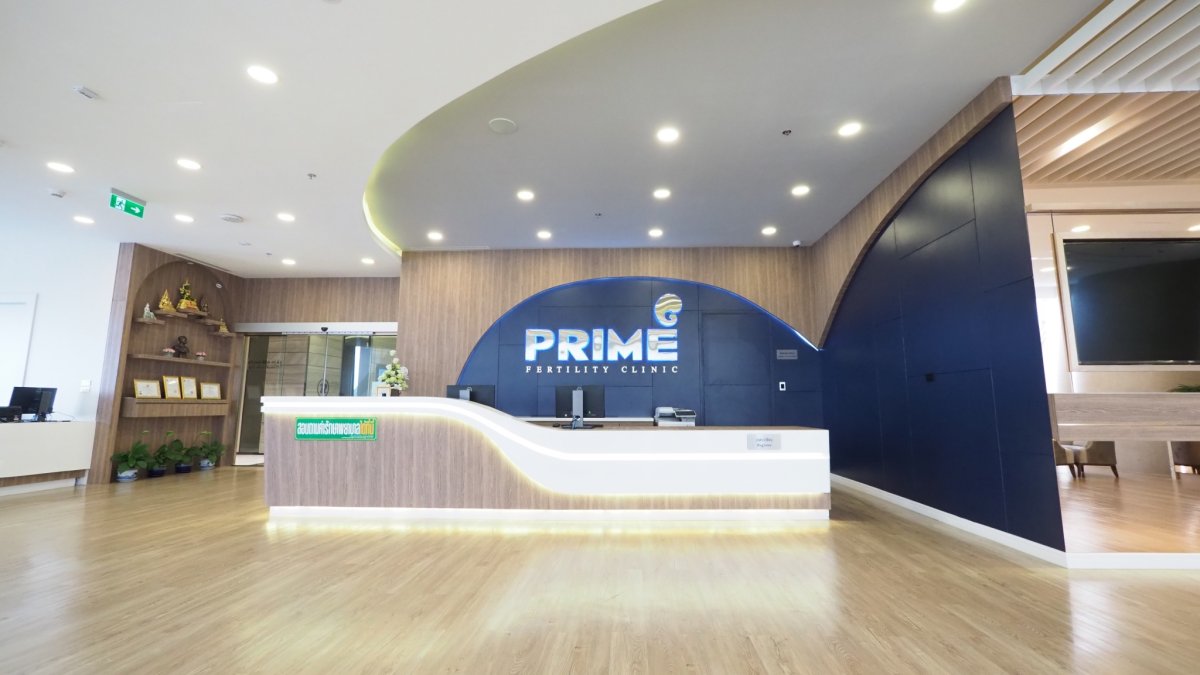
Prime Fertility Clinic is located at Pearl Bangkok in Bangkok. The referenced provider listing describes IVF, ICSI, embryo freezing, assisted hatching, and international-patient care. The listing names Dr. Poonkiat Punyamitr and reports 19 years of experience and more than 900 fertility procedures. The listing describes JCI Ambulatory Care accreditation. Current services, inclusions, and pricing should be confirmed in a written quotation. Lab-specific details such as embryologist qualifications and audit processes are not listed in the current library and should be requested directly.
7. Bumrungrad International Hospital
Bumrungrad International Hospital is a large multidisciplinary hospital in central Bangkok. The referenced provider listing describes IVF, ICSI, and reproductive medicine services. The listing names Dr. Phattaraphum Phophong and describes training in reproductive medicine and prenatal genetics. Its integrated setting may interest patients who need access to other medical specialties. Current fertility-team, laboratory, PGT, and price details should be confirmed directly. Lab-specific details such as incubator type and embryologist ratios are not listed in the current library and should be requested directly.
Questions to ask any clinic about its lab
Use these questions during consultations or email exchanges. Request written answers where possible.
- What type of incubators do you use, and how are culture conditions monitored?
- How many embryologists work in your lab, and what are their qualifications?
- What is the typical embryologist-to-case ratio during a treatment cycle?
- Which accreditations does your lab hold, and what is the current scope?
- How often are internal and external quality audits performed?
- Is PGT performed in-house or sent to an external laboratory?
- How will I receive updates on embryo development, and how often?
- Can you provide a written quotation that includes all lab-related fees?
Next steps for your research
Start by listing the clinics that interest you. For each one, request the lab-related information above. Compare the responses side by side. Remember that lab quality is one factor among many, including clinical expertise, communication, and cost. You can explore more provider profiles on our hospitals page and see how we structure comparisons on our hospital rankings page. Always confirm all details directly with the clinic before making a decision.
Frequently asked questions
What is the most important lab-quality signal to look for in a Thai fertility clinic?
There is no single most important signal. Look for a combination of factors: accreditation with a clear scope, qualified embryologists, documented quality-control processes, and appropriate incubator technology. Ask for written details and compare responses across clinics.
Does time-lapse incubation improve success rates?
Time-lapse incubation allows continuous monitoring of embryo development without disturbing the culture environment. Some studies suggest it may help embryologists select embryos, but it is not a guarantee of success. It is one tool among many, and its impact varies by clinic and patient.
How can I verify a clinic's accreditation?
Ask the clinic for the current certificate and its scope. You can also check the accrediting body's website if it maintains a public directory. Accreditation indicates that the lab has met certain standards, but it does not predict individual outcomes.
What should I ask about embryologist staffing?
Ask how many embryologists work in the lab, their qualifications, and how many cases each handles at one time. A lower ratio may allow more individualized attention, but there is no universal standard. Also ask whether the same team will manage your cycle throughout.
Is PGT performed in-house at all Thai clinics?
No. Some clinics perform PGT in-house, while others send samples to external laboratories. Ask where the testing will be done, what methods are used, and how results are reported. This can affect turnaround time and cost.
Continue your research
Medical information notice: This article is educational and does not replace individual assessment, diagnosis, genetic counselling or treatment advice from a licensed clinician. Provider services, availability, fees and policies should be verified directly before booking.